
Perishable Agro Commodity Wastage A Hidden Challenge and a Business Opportunity
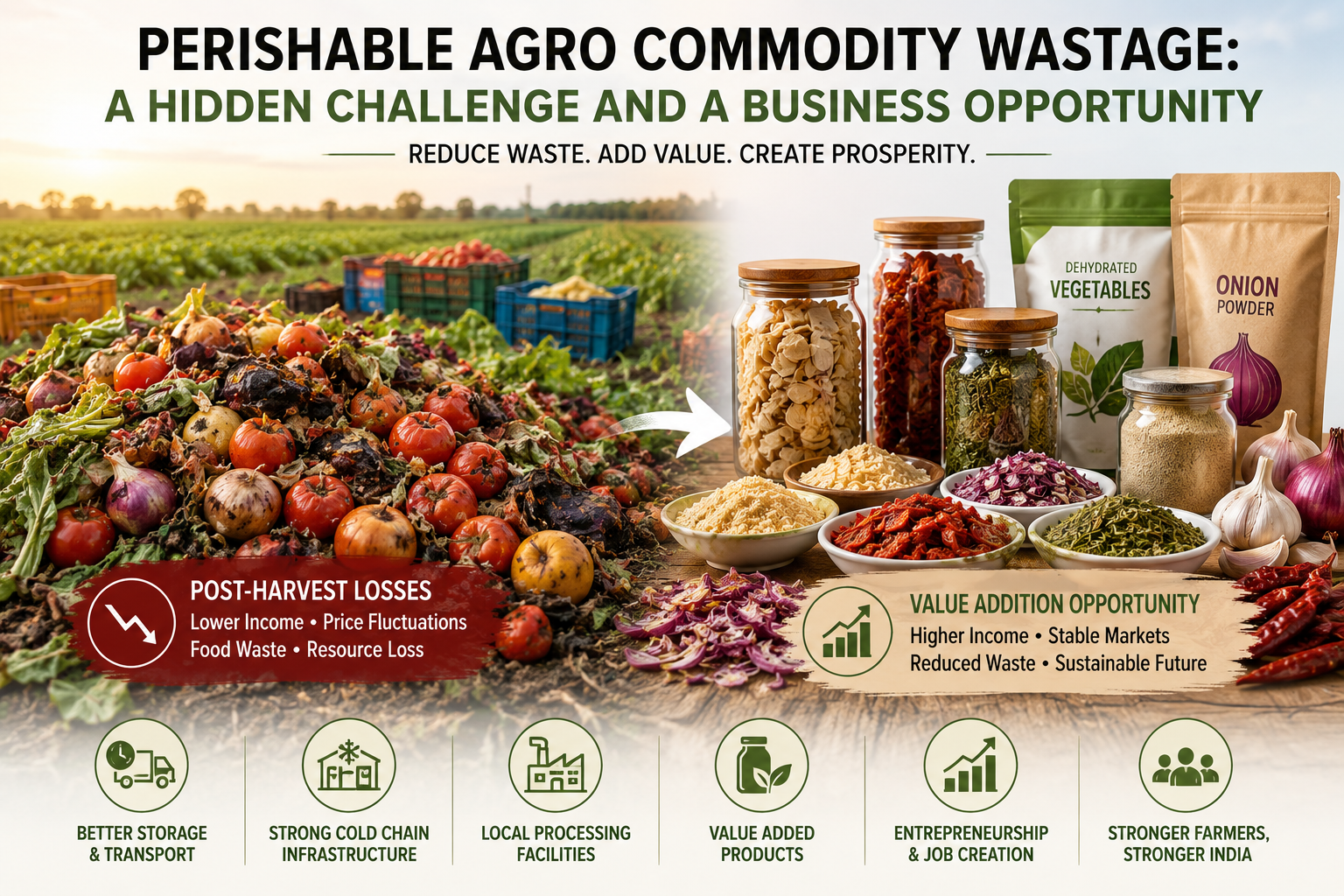
Every Harvest Doesn't Reach the Consumer
India is one of the world's largest producers of fruits, vegetables, spices, and agricultural commodities. Yet a significant portion of this produce never reaches consumers due to spoilage during harvesting, transportation, storage, and marketing.
For farmers, these losses translate into reduced income. For consumers, they contribute to price fluctuations. For the broader economy, they result in wasted resources and lower agricultural efficiency.
However, the same challenge also presents an opportunity for value addition and rural entrepreneurship.
Why Perishable Produce Gets Wasted
Several factors contribute to post-harvest losses:
- Inadequate Storage: Lack of proper storage facilities accelerates spoilage.
- Weak Cold Chain Infrastructure: Temperature-sensitive products deteriorate quickly without controlled storage and transportation.
- Transportation Delays: Long transit times reduce product quality and marketability.
- Market Oversupply: Seasonal gluts often force farmers to sell below cost or discard produce.
- Moisture and Microbial Growth: Poor handling conditions increase spoilage risks.
- Limited Processing Facilities: Many production regions lack local value-addition infrastructure.
Products such as tomatoes, onions, mangoes, bananas, leafy vegetables, chillies, and herbs are particularly vulnerable to these challenges.
The Economic Impact
When large quantities of fresh produce enter the market simultaneously, prices often decline sharply. Farmers are frequently forced to sell at extremely low rates, and in some cases, produce is left unharvested or discarded altogether.
These losses affect not only farm profitability but also the efficiency of the entire agricultural value chain.
Reducing post-harvest losses can improve farmer incomes while making better use of agricultural resources such as land, water, labour, and energy.
Turning Waste into Wealth Through Processing
Processing is one of the most effective ways to reduce wastage and improve product value.
Common value-added products include:
- Dehydrated Fruits and Vegetables
- Vegetable Powders
- Spice Products
- Herbal Ingredients
- Ready-to-Cook Food Ingredients
- Snack Products
- Natural Food Additives
By extending shelf life and improving marketability, processing enables access to new domestic and export opportunities.
Dehydration as a Practical Solution
Among various processing technologies, dehydration offers a simple and scalable approach for preserving perishable produce.
Benefits of Dehydration
- Extended Shelf Life: Products remain usable for longer periods.
- Reduced Transportation Costs: Lower product weight reduces logistics expenses.
- Lower Storage Requirements: Less space is required compared to fresh produce.
- Nutritional Preservation: Proper dehydration helps retain valuable nutrients.
- Year-Round Market Access: Products can be sold beyond harvest seasons.
- Branding Opportunities: Processed products can be packaged and marketed under dedicated brands.
Dehydrated onions, garlic, tomatoes, chillies, herbs, and fruits are widely used in food processing, hospitality, retail, and export markets.
Creating Rural Entrepreneurship Opportunities
Small and medium-scale processing units can create sustainable business opportunities in rural and semi-urban areas.
Key Advantages
- Additional Income Streams: Farmers can earn more through value-added products.
- Employment Generation: Processing activities create local jobs.
- Reduced Dependence on Commodity Markets: Entrepreneurs are less exposed to raw produce price fluctuations.
- Better Utilization of Surplus Produce: Excess production can be converted into marketable products.
- Strengthened FPOs: Processing activities can improve the commercial viability of Farmer Producer Organizations.
With appropriate technology, training, and market access, agricultural processing can become a powerful driver of rural economic development.
The Way Forward
Reducing perishable agro commodity wastage requires a shift from selling raw produce to creating value-added products. Technologies such as dehydration can help transform surplus and rejected produce into profitable business opportunities.
The future of agriculture lies not only in production but also in preservation, processing, and value addition. Entrepreneurs, farmer groups, and FPOs that adopt these approaches can build more resilient and sustainable agricultural enterprises.